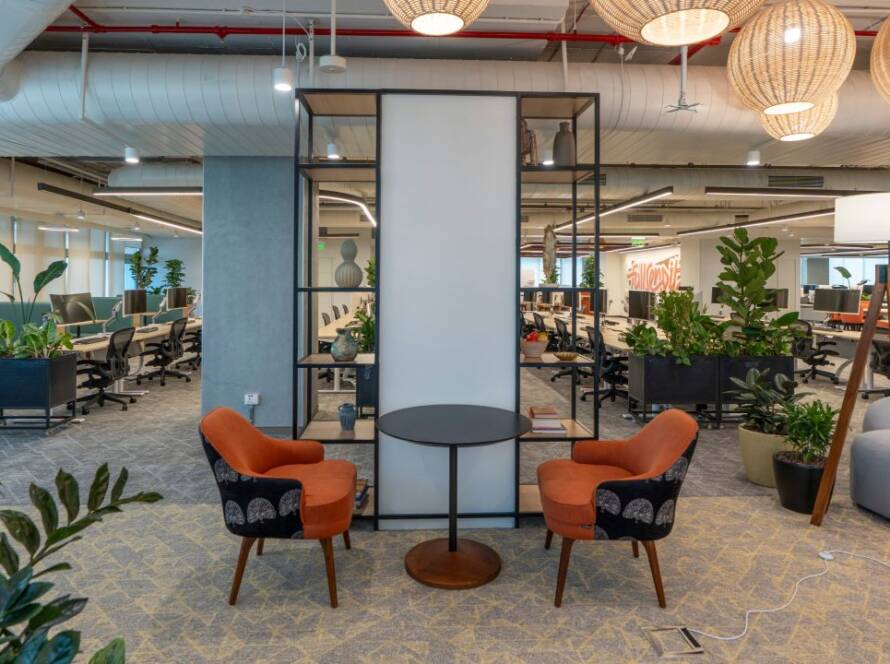
A workplace may look exceptional on the day it is completed. But the true test of great design comes months and years later.
Can it adapt to growth?
Can it support changing workstyles?
Can it accommodate new teams, technologies, and business priorities without constant disruption?
The most successful workplaces are not designed for today alone. They are designed for what comes next.
This is where workplace design shifts from being a visual exercise to becoming a strategic business decision.
Designing Beyond Immediate Requirements
Many organisations approach workplace planning based on current headcounts, existing workflows, and present operational needs.
While this may solve short-term challenges, it often creates limitations as businesses evolve.
Teams expand. Departments restructure. Technology changes. New ways of working emerge.
Future-ready workplace design considers these possibilities from the beginning, creating environments that remain relevant even as organisations grow and transform.
The goal is not simply to design a workplace.
The goal is to design flexibility into the workplace itself.
Adaptability Has Become a Competitive Advantage
The pace of business change today is faster than ever before.
Organisations require workplaces that can respond quickly without requiring major reconstruction every few years.
Flexible workstations, modular meeting spaces, adaptable collaboration zones, and multifunctional environments allow businesses to evolve without sacrificing productivity.
This adaptability helps organisations remain agile while protecting long-term investments in their workplace infrastructure.
A workplace that can evolve with the business becomes a strategic asset rather than an operational challenge.
Anticipating Employee Needs Before They Emerge
Great workplace design is often invisible.
Employees may not notice every design decision, but they experience the impact daily.
Spaces that support focus, collaboration, privacy, movement, and wellbeing feel intuitive because they have been designed around anticipated needs rather than reactive solutions.
By studying workplace behaviour, employee journeys, and organisational goals, designers can identify future challenges before they begin affecting performance.
This proactive approach reduces friction and creates environments that continue supporting teams as workplace expectations evolve.
Technology and Design Must Work Together
The future workplace is increasingly shaped by technology.
Smart lighting systems, integrated collaboration tools, occupancy sensors, and flexible infrastructure are changing how employees interact with their environment.
However, technology alone cannot solve workplace challenges.
Its effectiveness depends on how seamlessly it is integrated into the overall design strategy.
When workplace planning considers future technological adoption from the outset, organisations avoid costly modifications and ensure smoother transitions as new solutions emerge.
The Value of Strategic Design and Build
Creating future-ready workplaces requires alignment between planning and execution.
A design strategy may anticipate future growth, but without precise implementation, that vision can quickly lose its effectiveness.
At Exotic Innovations, we believe workplace transformation succeeds when strategy, design, and execution operate as one continuous process. Every decision, from spatial planning and circulation to material selection and infrastructure integration, contributes to the long-term performance of the workplace.
This approach allows organisations to create environments that remain functional, relevant, and resilient for years to come.
Final Thought
The best workplace designs are not measured by how well they solve today’s challenges.
They are measured by how effectively they prepare organisations for tomorrow’s opportunities.
Businesses will continue to evolve.
Teams will continue to change.
Technology will continue to advance.
Workplaces that anticipate these shifts will remain valuable long after trends have passed.
Because great design is not about reacting to change.
It is about designing for it before it arrives.