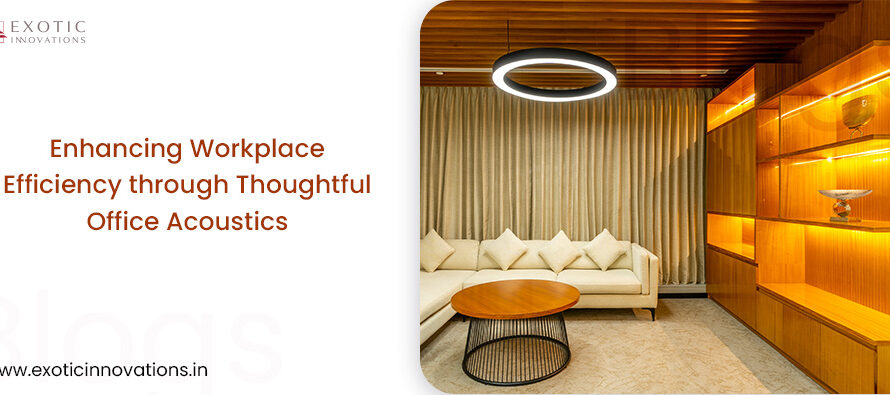
Walk into any office, and you’ll notice something interesting. One breakout corner is always occupied. A particular cafe table becomes the go-to spot for quick discussions, certain informal seating areas naturally attract people throughout the day. Meanwhile, other spaces designed for the very same purpose remain surprisingly empty.
It’s easy to assume this comes down to personal preference but more often than not, it’s the result of design, the kind of thinking a good corporate office interior design company brings to a project. People don’t choose spaces randomly, they respond to subtle environmental cues that make one place feel more inviting, comfortable and useful than another.
The question isn’t why employees prefer certain spaces. It’s what those spaces are doing differently. The most successful breakout spaces are rarely the largest or the most visually striking, they’re the ones that feel effortless to use.
This begins with location. People are more likely to use a space when they can see activity happening within it. A glimpse of colleagues having a conversation or taking a short break signals that the space is approachable. Completely enclosed areas, while valuable for privacy, often discourage casual use because they feel disconnected from the rhythm of the workplace. While visibility matters just as much, comfort plays an equally important role.
Not just through furniture, but through proportion, lighting, acoustics, and materiality. Natural daylight encourages people to stay a little longer and acoustic separation allows conversations without becoming a distraction to others. Soft materials and greenery create an environment that feels less formal than a meeting room, yet more purposeful than a corridor. This attention to how people actually experience a space is the essence of human centric office design.
These details don’t compete for attention, they quietly shape behaviour. Another overlooked factor is choice. Not every employee wants the same environment. Some seek a quiet corner to reset between meetings and others prefer an open cafe setting where spontaneous conversations are more likely to happen. The most successful workplaces recognise that people need different environments at different moments throughout the day, a principle at the heart of hybrid workplace design.
Perhaps the biggest misconception is that breakout spaces are simply places to take a break. In reality, they’re where workplace culture becomes visible.
They’re where new ideas begin before they’re scheduled into a meeting. Where colleagues from different teams cross paths. Where mentoring happens naturally. Where relationships are built outside formal work settings.
These interactions can’t be mandated but they can be designed for. The most effective workplaces don’t ask employees to collaborate more because when a space feels comfortable, accessible, and connected to the everyday flow of work, people instinctively choose it.
And perhaps that’s the real measure of a well-designed workplace, not how beautiful a breakout space looks but whether people keep coming back to it.
And that’s how design wins every time.