For the first time in most workplaces’ history, four generations are sitting on the same floor. Gen Z employees a few years into their first job. Millennials are now leading teams. Gen X managing across both. And Boomers, still very much present in leadership. Each of them was shaped by a different working world, and each of them, quietly, expects something different from the office.
This isn’t a generational stereotype exercise. It’s a genuine design challenge. People rarely disagree about whether an office should be “nice.” They disagree about what makes it usable, and that disagreement isn’t really about age. It’s about habit, working style, and how each person has come to define focus, comfort, and collaboration over the course of their career.
Different Habits, Same Floor Plate
Some employees are used to moving through the day across many different settings, a desk, a lounge, a call booth, a collaborative table. Others have built entire careers around consistency, a known desk, a familiar routine, minimal disruption. Neither habit is generational in a strict sense, but tenure and career stage do shape how attached someone is to routine versus flexibility.
The mistake most workplaces make is designing for one of these habits and assuming the other will simply adjust. It rarely does. A space built entirely around movement and flexibility can feel unmoored to someone who thrives on routine. A space built entirely around fixed desks and hierarchy can feel rigid to someone who has never worked any other way.
Where the Real Friction Shows Up
The friction is rarely dramatic. It shows up in how confidently someone navigates a space, how quickly they find a spot that works for the task at hand, and whether the environment assumes one “correct” way of working. Hybrid workplace design has to account for this range of habits, not just where people sit, but how differently they move through a day, and how much certainty or flexibility they each need to feel comfortable.
Designing for Range, Not an Average Employee
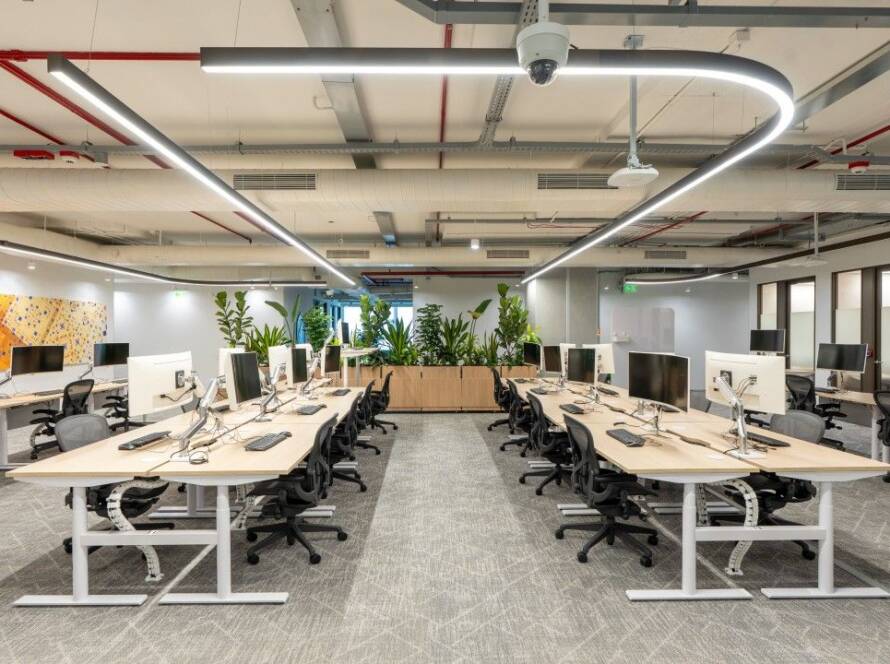
The better approach isn’t splitting the difference evenly across every space. It’s building genuine range into the floor plate: some environments built for routine and stability, others built for movement and change, with enough clarity in how the space is organised that anyone can find their footing in it quickly, regardless of how long they’ve been working or how they were trained to work.
This is the harder, less visible side of human centric office design: designing not for an average employee, but for the real spread of habits and expectations actually walking in every day. It’s a nuance that any serious corporate office interior design Bengaluru project increasingly has to plan for as workplace demographics keep shifting.
Perhaps the office of the future isn’t the one that appeals to everyone equally. It’s the one flexible enough that nobody has to compromise.
Maybe the real question for any workplace today isn’t “who is this office designed for?” It’s “how many different working habits does it need to support, at once?”